Strange but sourced
Rainforest animals
Rainforest animals have had a very long time to get odd. Here are some of the oddest, with what the zoos, museums and research papers actually say.
The sloth and its moths
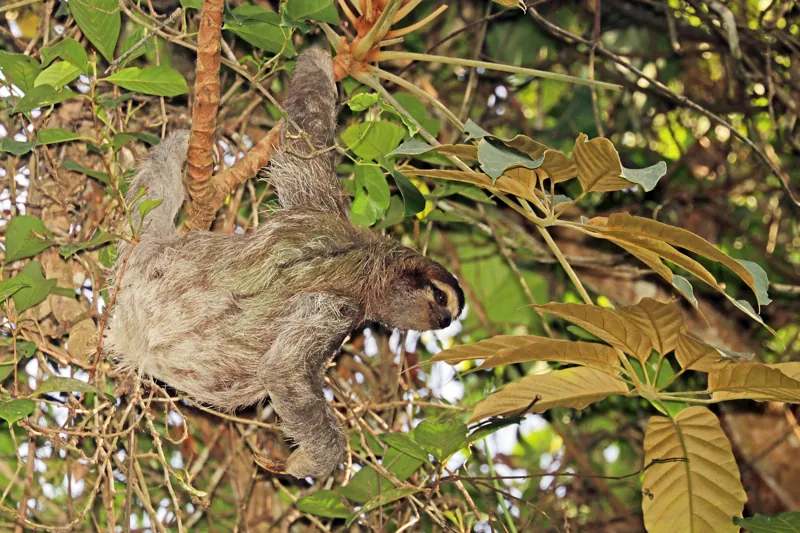
Sloths are among the slowest-moving animals on Earth, and the Smithsonian’s National Zoo says the reason is diet: leaves are low in calories, so sloths have very slow metabolisms and save energy by moving slowly.1 Their digestion is so slow that a sloth usually climbs down from its tree only about once a week, to poop.1 They spend most of their lives hanging upside down, sleeping, eating, mating and even giving birth that way.2
A sloth’s coat is a small ecosystem. Each strand of its coarse fur has grooves running from top to bottom, and two kinds of blue-green algae grow in them; the green tint helps the sloth blend in.1 Some species, like the sloth moth, live only on sloth fur.1
In 2014 researchers described how the moths and the sloth may help each other. When a sloth climbs down, female moths lay their eggs in its fresh dung; the adult moths that emerge fly up to the canopy to find a sloth and mate in its fur.3 The team found that sloths with more moths had more nutrient-rich fur and more algae, and three-toed sloths had significantly more moths, nutrients and algae than two-toed sloths.3 They investigated whether the algae might be a missing supplement to the sloth’s poor diet.3
And sloths can swim. The National Zoo calls them strong swimmers who use a sort of doggy paddle.1 San Diego Zoo says they can drop from a tree into a river and swim across, and often wait for the forest to flood to swim to new trees.4
The frog that hides its blood
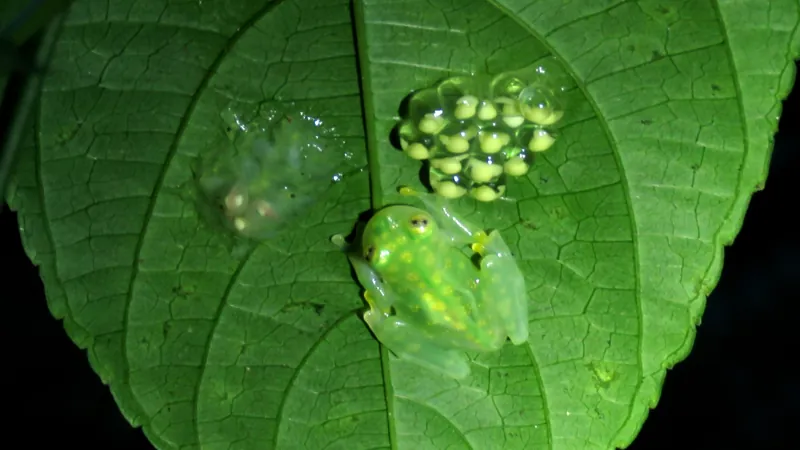
Glass frogs are among the only land animals with backbones that can become see-through. The trouble for any transparent animal is blood: red blood cells absorb green light and reflect red, so blood shows up, especially against a green leaf.5
A 2022 study in Science found the trick in the northern glass frog, which measures no more than a few centimetres. When the frogs are asleep, they remove nearly 90 percent of their circulating red blood cells and store them in their liver, which is wrapped in a reflective membrane.5 Asleep on the underside of a leaf, their muscles and skin become transparent, and only bones, eyes and internal organs show.5
The bird whose chicks have claws
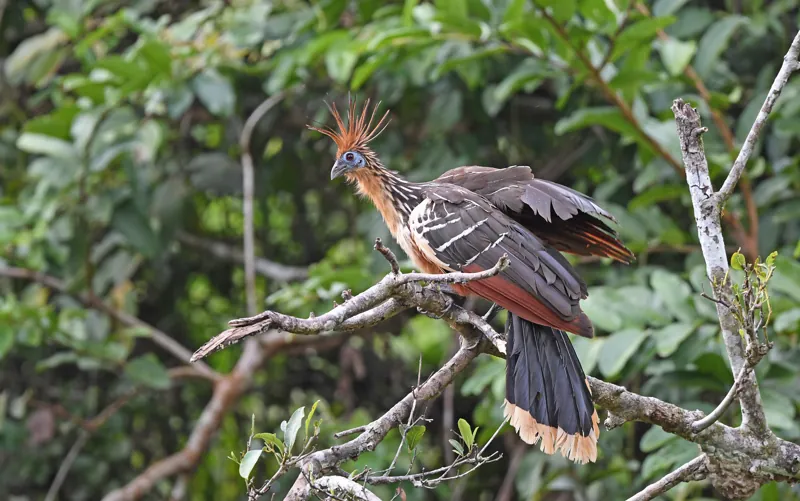
Young hoatzins have a pair of working claws on each wing, on the first and second fingers. Adults lose them.6 Hoatzins nest on branches over water, about 6 to 15 feet up, and the chicks use the claws to escape: they climb along branches out of reach of monkeys, hawks and snakes, or drop into the water below and swim under the surface to safety.6
Hoatzins eat leaves. They have an enlarged crop holding bacteria that break down the leaves’ cell walls, and the heavy crop makes them clumsy flyers; young hoatzins can take up to seventy days before they can fly at all.6
The harpy eagle
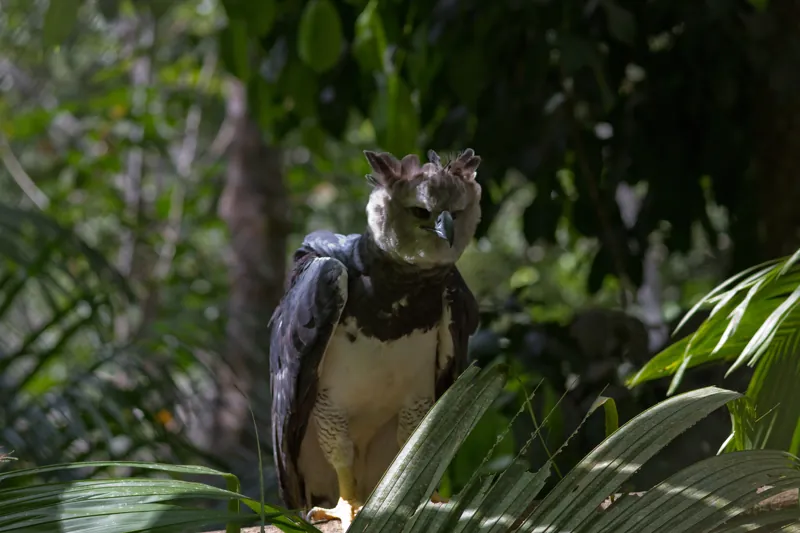
The harpy eagle is not the largest bird of prey, San Diego Zoo says (that is the Andean condor), but it is the heaviest and most powerful. Its curved back talons are about 13 centimetres (5 inches) long, larger than a grizzly bear’s claws, and its legs can be as thick as a small child’s wrist.7 It flies below the canopy and snatches monkeys and sloths weighing up to 7.7 kilograms (17 pounds).7
The okapi: a forest giraffe
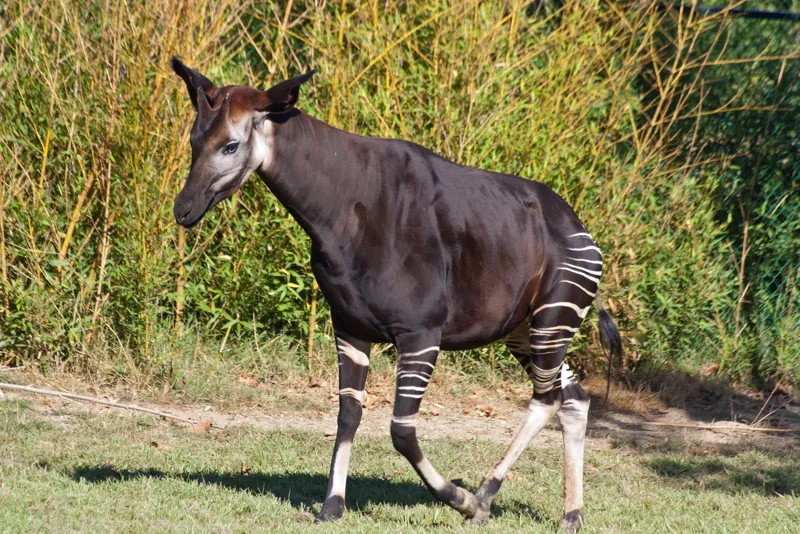
The okapi has a zebra’s striped legs and a giraffe’s head, and it is the giraffe that counts: okapis are the only close living relative of giraffes. Like a giraffe, an okapi has a long, dark, prehensile tongue, which it uses to strip buds and young leaves from the understory.8 The stripes, bold to us, are camouflage in the patchy light of the forest, and may help a young okapi follow its mother.8
The Indigenous people of the Ituri Forest knew of okapis for generations, but scientists did not know of them until 1901. San Diego Zoo researchers later found that okapis also use calls so low that we cannot hear them at all.8
Poison frogs that are not poisonous in zoos
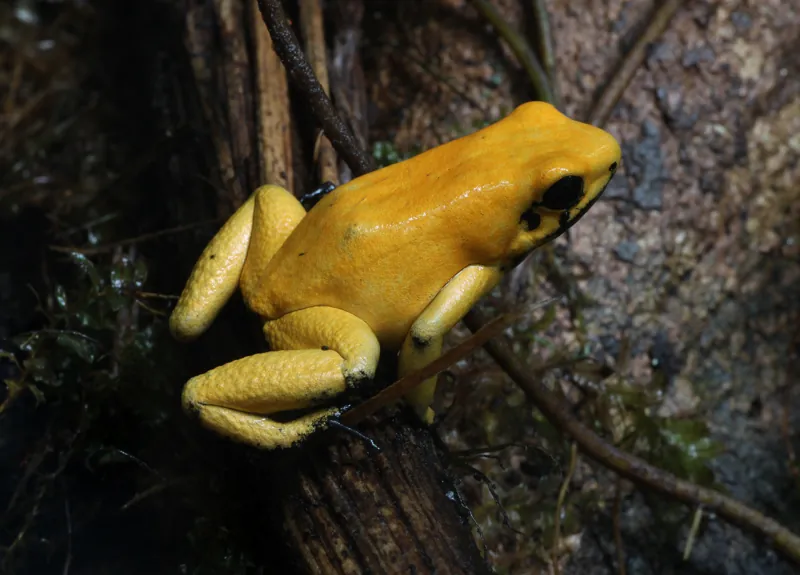
A single golden poison frog, no larger than a bottle cap, can supply enough poison for 30 to 50 hunting darts, and the poison on a dart stays active for up to a year.9 The Chocó people of Colombia handle the frogs with waxy leaves and dip their darts in the frogs’ skin secretions.9
The poison is not made from nothing. It comes from the frogs’ wild diet, mostly ants, termites, centipedes and tiny beetles, and frogs fed a regular zoo diet eventually lose most, if not all, of their toxicity.9 Some poison frog parents carry their tadpoles on their backs to water, such as a pond or the pool inside a bromeliad, and some mothers come back to lay unfertilised eggs as food for them.9
Swimmers
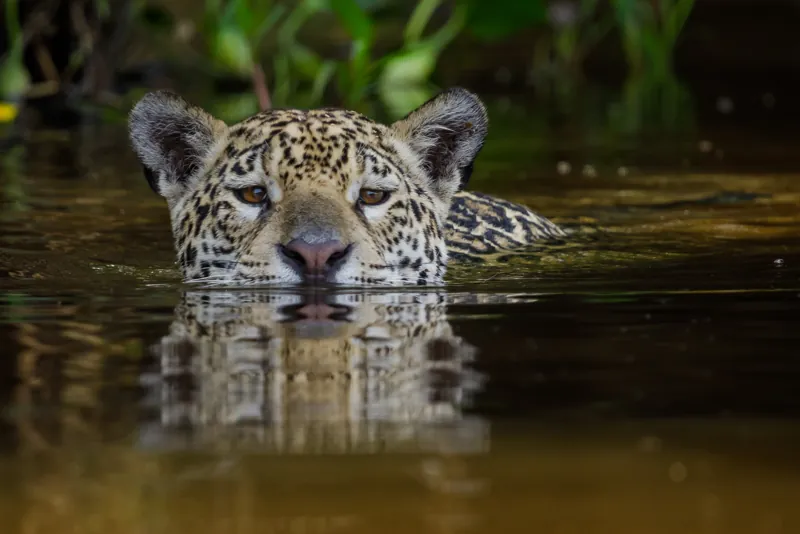
Jaguars are adapted to the rainforest, San Diego Zoo says, with muscular limbs and large paws for climbing and swimming; they are strong swimmers who enjoy a good dip. They kill prey by piercing the skull with their teeth, and some jaguars are black-on-black, or melanistic.10
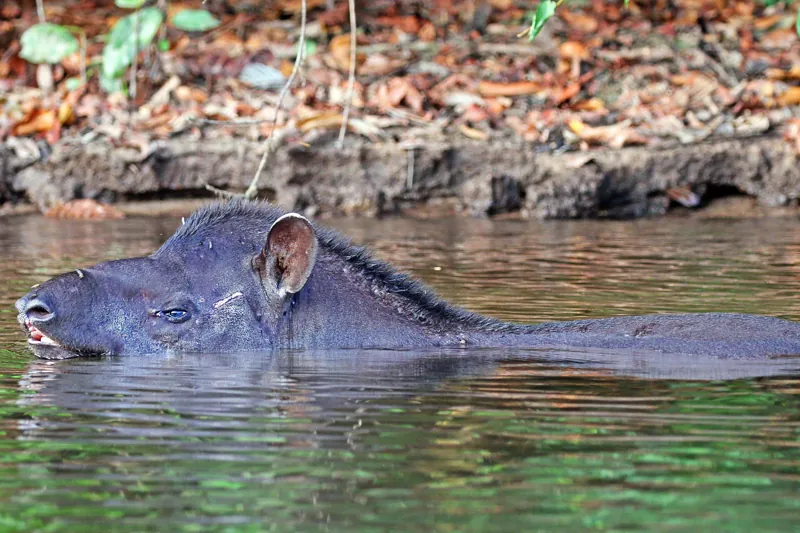
The tapir’s nose and upper lip form a flexible snout, a small trunk it uses to grab branches and pluck fruit.11 Sloths swim too, as above.4
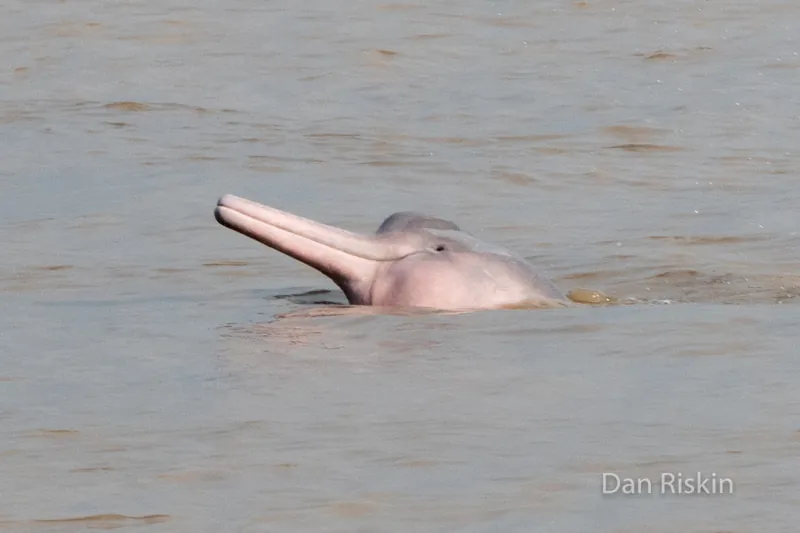
The Amazon river dolphin, or boto, lives in the waterways of the Amazon and Orinoco and is the largest river dolphin species in the world.12
The apes
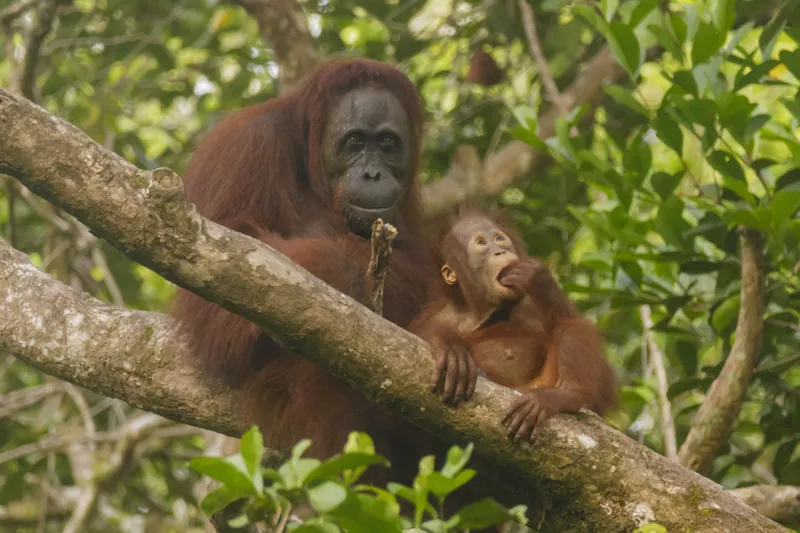
Orangutans are the largest fruit-eating animals on Earth and the only great apes whose native home is outside Africa. Their arms stretch more than 2 metres (7 feet) from fingertip to fingertip.13 They usually build a new nest every night, and a young orangutan may nurse for up to seven years, the longest childhood of the great apes.13 A third species, the Tapanuli orangutan of Sumatra, was described only in 2017.13
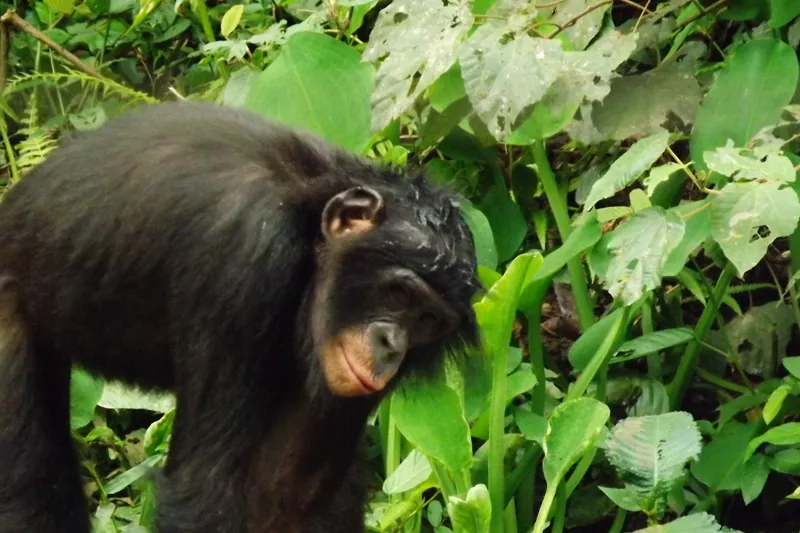
Bonobos live only in a small part of one country, the Democratic Republic of the Congo. Earlier scientists thought they were just small chimpanzees; in bonobo society, the females take charge.14
The forest’s ants, farmers for 50 million years, are on the plants page. The Congo’s forest elephants are on the Congo page.