Africa’s great forest
The Congo Basin
The Amazon gets the headlines. The Congo Basin, the second great rainforest, hides some of the biggest surprises: a peatland nobody had mapped, and elephants that garden the forest.
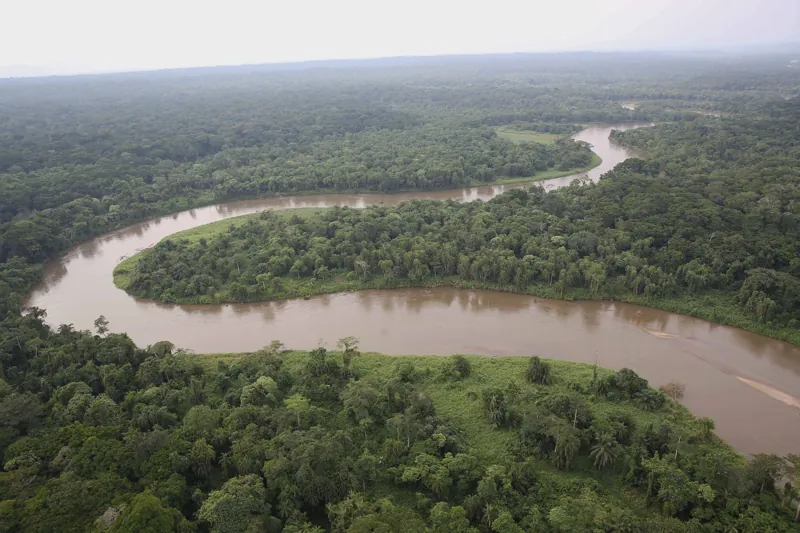
The Congo Basin includes Cameroon, the Central African Republic, the Democratic Republic of the Congo, Equatorial Guinea, Gabon and the Republic of Congo. The World Resources Institute calls it the world’s largest remaining tropical forest carbon sink, with a critical role in regulating the global climate.1 Our places page has Britannica on why Africa’s rainforest matters to the human story.
The peatland nobody had mapped
In 2017 a team published field measurements from the Cuvette Centrale, a depression in the central Congo Basin covered in swamp forest. Under the trees they found peat: an estimated 145,500 square kilometres of it, making it the most extensive peatland complex in the tropics.2 That is more than five times the largest area that had been reported for the Congo Basin before.2
The peat is not deep, at most 5.9 metres and typically 2 metres, but it is vast, and the team estimated that it stores about 30.6 petagrams (30.6 billion tonnes) of carbon below ground, similar to the carbon held above ground in all the tropical forests of the Congo Basin.2 Radiocarbon dates show peat began building up about 10,600 years ago, when central Africa became wetter. The authors warn that this carbon is vulnerable to land-use change and to any future fall in rainfall.2
An estimate, with a wide range: the 30.6 billion tonne figure has a 95 percent confidence interval of 6.3 to 46.8 billion tonnes, and the area 131,900 to 156,400 square kilometres.2 We give the central figures with that range.
Elephants that plant the forest
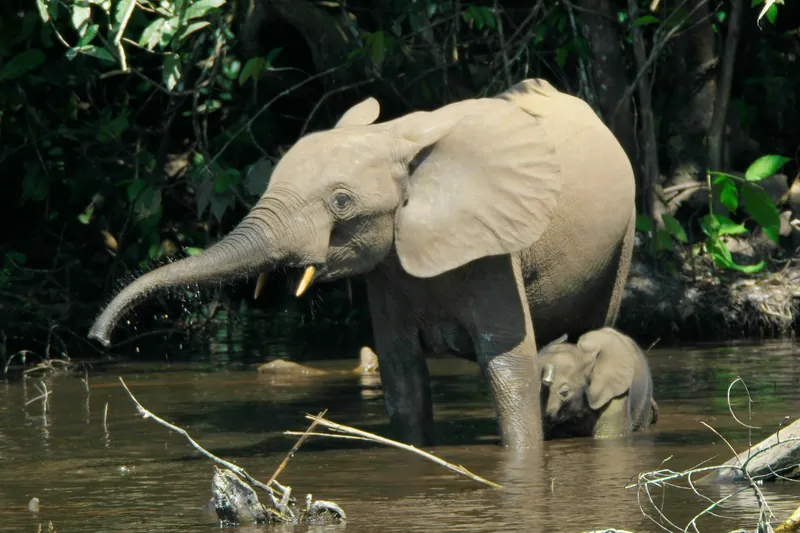
Forest elephants eat fruit and spread the seeds. A study in the Ndoki forest, led by Stephen Blake, examined 855 elephant dung piles and found that forest elephants disperse more than 96 species of plants, carrying seeds as far as 57 kilometres from the parent tree.3 Mongabay’s report on that work notes that forest elephants were slaughtered in huge numbers in the ivory rush of the late 19th century and are still in decline.3
Elephants also change the shape of the forest. A 2019 modelling study in Nature Geoscience found that by thinning out small trees, elephants change the competition for light, water and space, favouring fewer, larger trees with denser wood, and so more carbon above ground. Losing forest elephants, it estimated, would cut above-ground biomass in central African rainforests by 7 percent.4
Apes and a forest giraffe
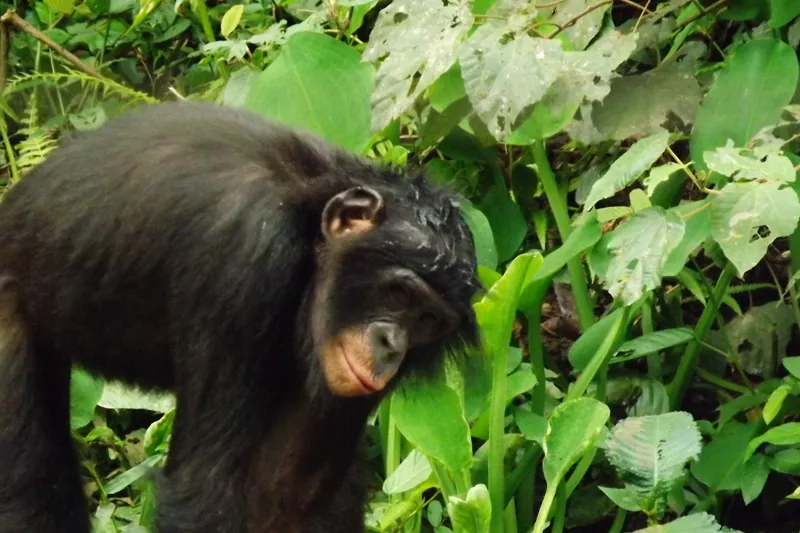
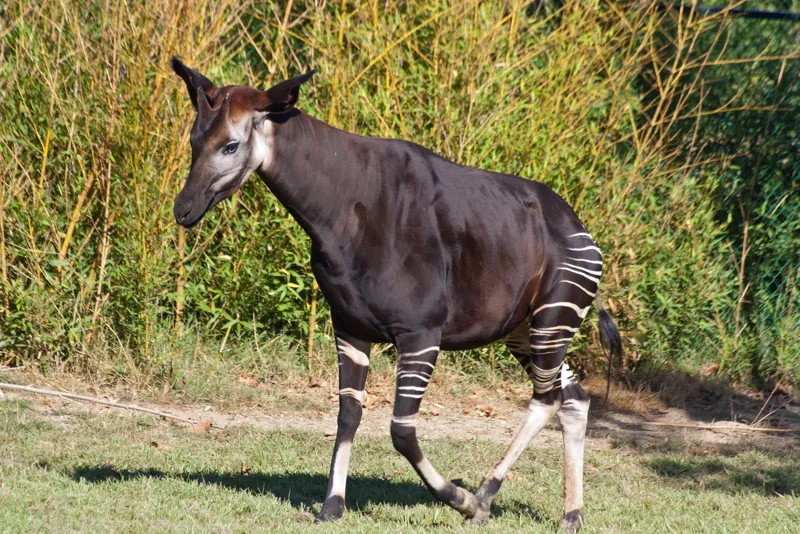
Bonobos live only in a small part of one country, the Democratic Republic of the Congo, and prefer old-growth forest with trees that fruit at different times of year.5 The okapi, the giraffe’s only close living relative, lives in the forest too; Indigenous people of the Ituri Forest knew it for generations before scientists heard of it in 1901.6
Under pressure
The World Resources Institute says primary forest loss has been rising over the past decade in some Congo Basin countries, and that loss in parts of the basin is closely linked to local needs for food and fuelwood, stemming from poverty.1 In 2025 the Democratic Republic of the Congo was among the countries where tropical primary forest loss remained high.1 The figures are on changing rainforests.