Stranger than flowers
Rainforest plants
The plants of the rainforest climb, hitchhike, parasitise and smell of rotting meat. A few even run a toilet.
The biggest single flower
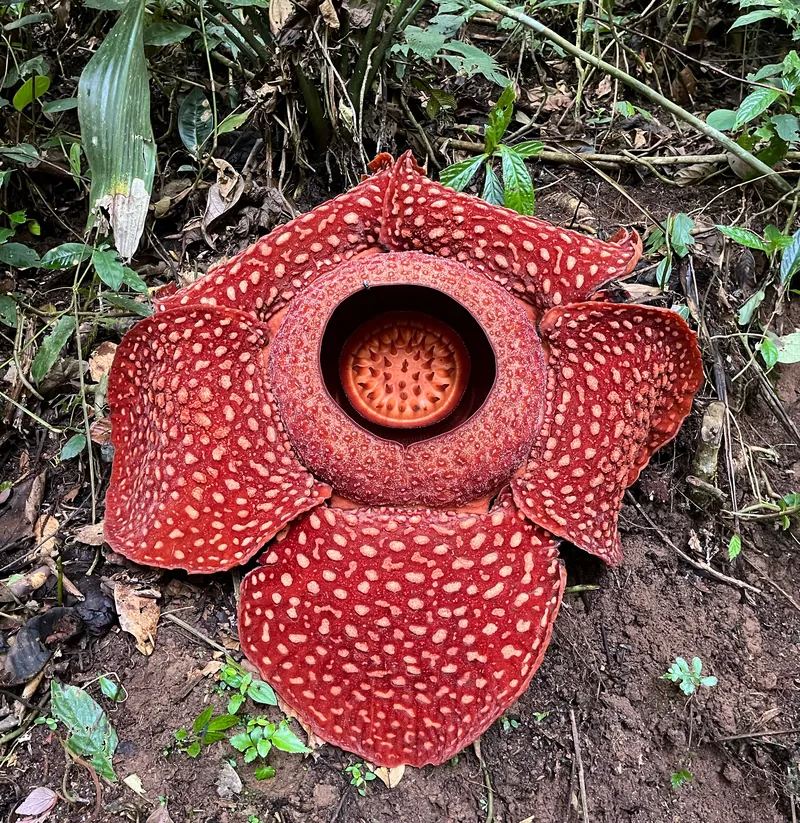
Rafflesia arnoldii, from the remote rainforests of Sumatra, produces the largest single flower in the world, more than a metre across, Oxford Botanic Garden says.1 It is a parasite with no roots, leaves or stems. It lives inside a tropical vine and only appears above ground to bloom.1
The flowers smell of rotting meat. Flies, fooled into expecting a carcass to lay eggs on, carry pollen from flower to flower.1
The titan arum
The titan arum, Amorphophallus titanum, is native to the rainforest of Sumatra, where it grows in moist, shaded soil on the forest floor. A European botanist, Odoardo Beccari, first described it in 1878.2 The United States Botanic Garden says its flowering structure averages about 5 feet tall, the largest is said to have reached 12 feet, and it lasts about two days at full bloom. Its leaves can be more than 18 feet tall.2
A pitcher plant that is also a toilet
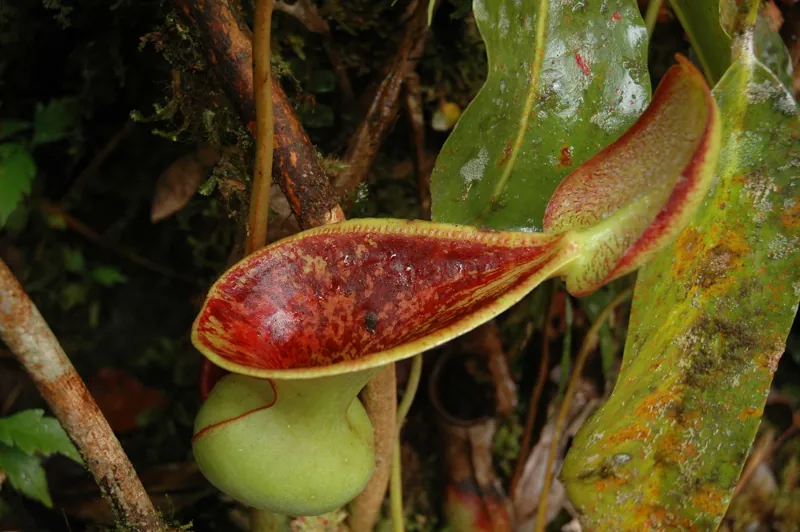
Most pitcher plants trap insects. Nepenthes lowii, in Borneo’s mountains, has found another source of nitrogen. Its upper pitchers catch almost no prey, but mountain tree shrews visit them to feed on a sweet exudate on the lid, and defecate into the pitcher while they do.3 A 2009 study found that tree shrew droppings supplied between 57 and 100 percent of the nitrogen in the leaves of mature plants.3
Seeds that fly
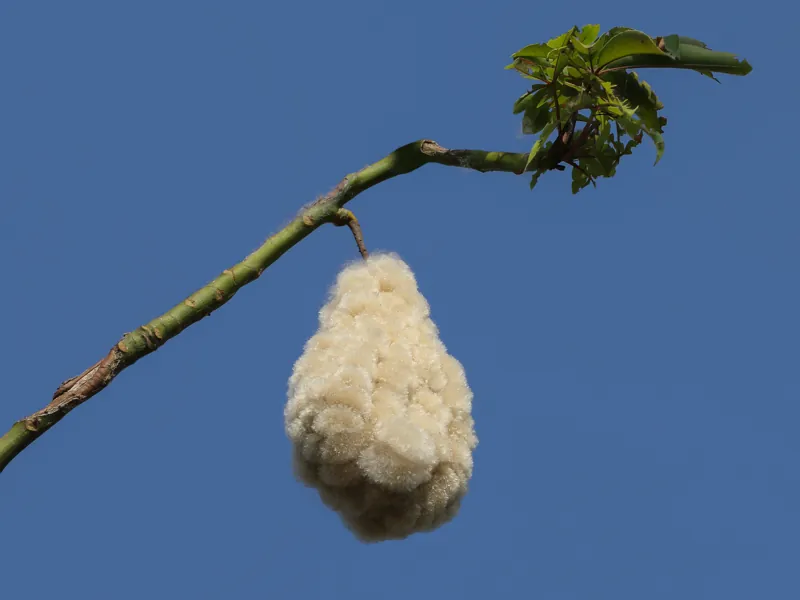
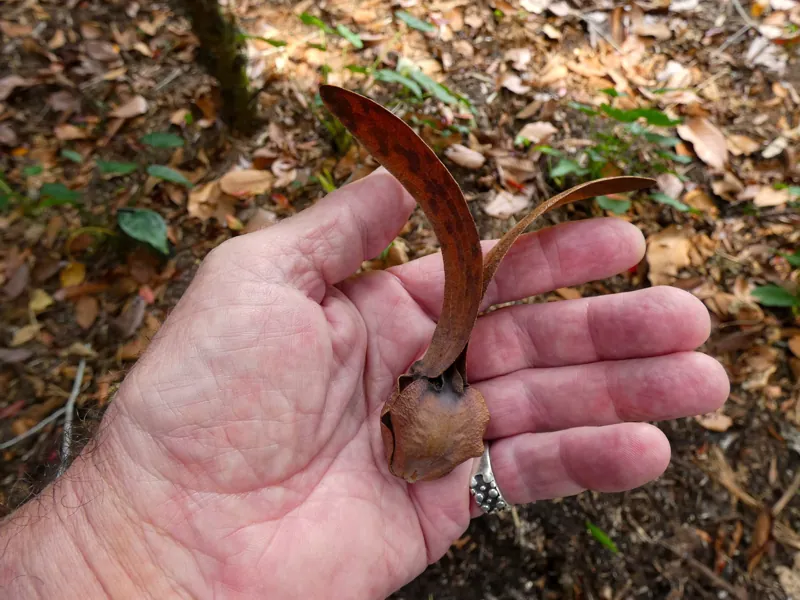
The tallest trees live in their own climate, drier and windier than the canopy below, and many use the wind. The kapok, or silk-cotton tree, of South America releases seeds attached to cotton-like fibre that drift for miles, and sheds all its leaves before fruiting so the breeze passes freely.4 In Asia, dipterocarp seeds have wings that make them spin and slow as they fall, so the breeze can carry them a long way.4
Gardens in the trees
Epiphytes are plants that grow on other plants without taking nutrients from them, living on what comes from the air, the rain and the compost on branches.5 Mongabay counts well over 15,000 epiphytes in the American tropics alone, and over 30,000 worldwide.5 More than 2,000 epiphytes may grow on a single emergent tree, making up a third of its total weight.4 Many houseplants and “air plants” are rainforest epiphytes.5
Orchids are the most diverse flowering plants, with over 18,000 species, and about 70 percent of them grow as epiphytes.5
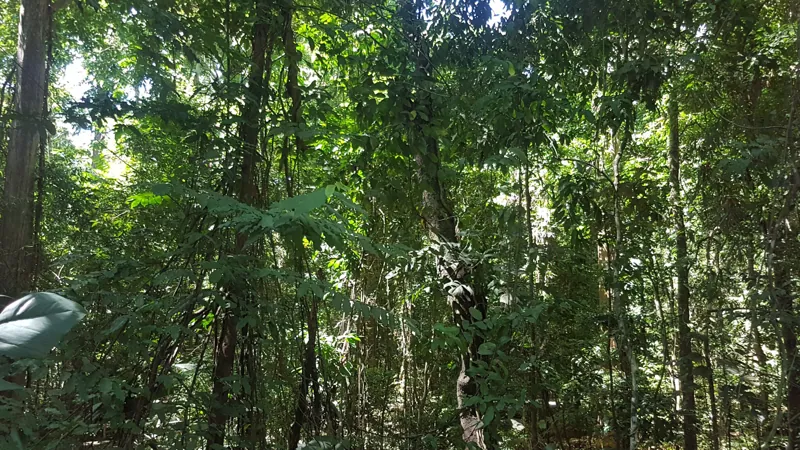
Lianas are woody vines that start on the ground as small shrubs and use other plants to climb to the light. Some of the largest may exceed 3,000 feet in length, and in some forests their leaves make up 40 percent of canopy leaves.6 Because they borrow other plants’ support, they spend little on their own and put more into leaves and growth.6
Chocolate came from the Amazon
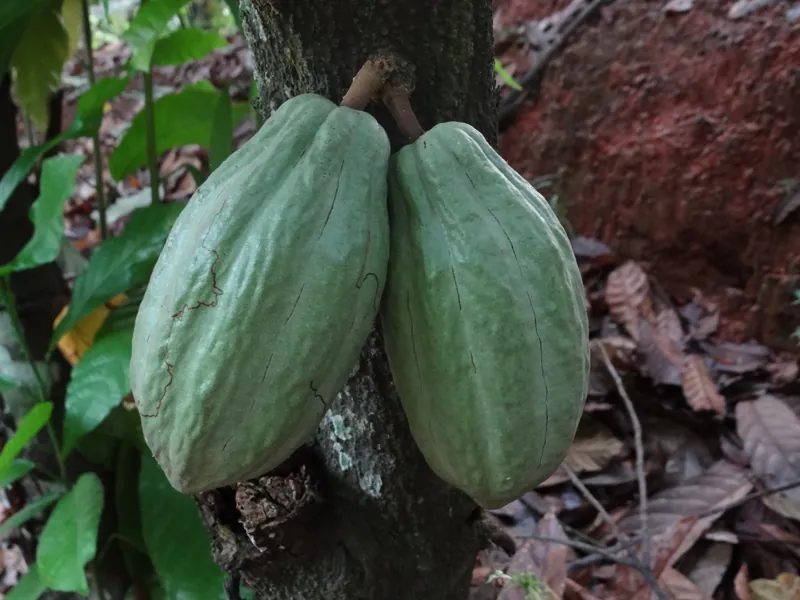
A 2018 study found that cacao, the plant chocolate comes from, was domesticated around 1,500 years earlier than had been thought, and in South America rather than Central America.7 The evidence came from the Santa Ana-La Florida site of the Mayo-Chinchipe culture in the upper Amazon of Ecuador: starch grains specific to cacao inside pottery, residues of theobromine, and ancient cacao DNA, showing use between 5,300 and 2,100 years ago.7
Ants that farm
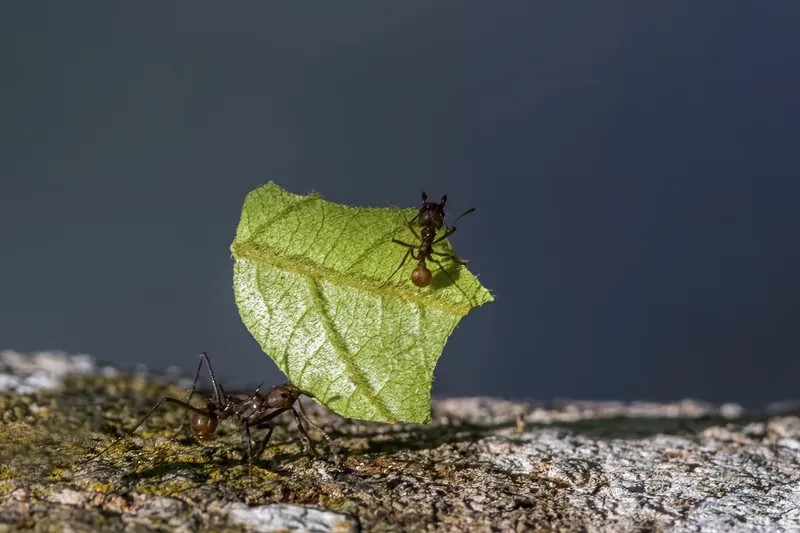
Leafcutter ants do not eat the leaves they carry. They take them home to feed a fungus crop. Ants learned to farm about 50 million years ago, long before people did.8
The forest floor is short of light, and that shapes the plants there: see up through the canopy.